Our work is grounded in decades of clinical research, Harvard Medical School studies, and 5,000 years of empirical observation.
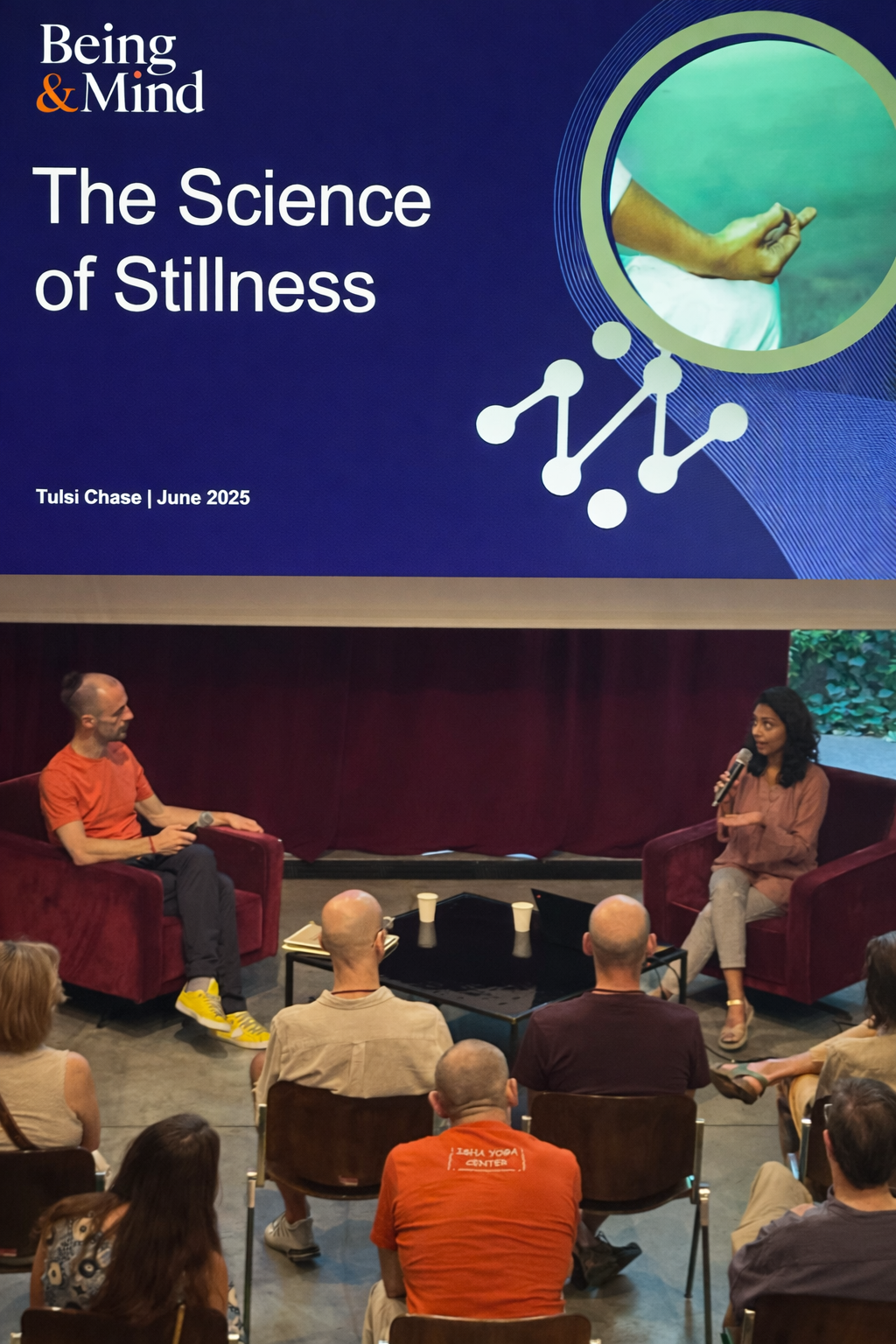
Tulsi leads research at Harvard Medical School's yoga and meditation research center, where she studies the measurable physiological effects of practices that have been used for millennia.
Her work focuses on how yoga, meditation, and Ayurvedic protocols affect biomarkers in patients with chronic conditions — including cancer, neurodegenerative diseases, and post-viral syndromes like long COVID.
Specific breathwork protocols measurably shift autonomic nervous system balance within minutes. We use these in every talk, retreat, and 1:1 session.
Long-term meditation practice correlates with increased cortical thickness, improved working memory, and reduced amygdala reactivity. The brain changes shape.
Emerging research supports the Ayurvedic model of individual constitution (prakriti) as a framework for personalized wellness — centuries before "precision medicine" existed.
Yoga and Ayurvedic interventions show measurable benefits for cancer-related fatigue, Parkinson's motor symptoms, and long COVID recovery in controlled studies.
We don't cherry-pick studies to validate what we already believe. We start with the classical teachings — refined over 5,000 years of human observation — and we test them against modern standards of evidence. When the data supports the practice, we teach it with confidence. When it doesn't, we say so.
This is what makes our work different from both the wellness industry (which often ignores evidence) and conventional medicine (which often ignores tradition). The most powerful interventions live at the intersection.
Every protocol we design — whether for a Fortune 500 keynote or a 1:1 client — is built on this foundation: classical wisdom, rigorously examined, practically applied.
Peer-reviewed studies on the practices we teach — from meditation and breathwork to yoga and lifestyle intervention.
8-day advanced meditation retreat with a vegan diet significantly elevated anti-inflammatory acylglycines and lowered atherogenic lipid markers.
Gene expression analysis showed significant up-regulation of ~220 immune-related genes — particularly interferon pathways — without triggering inflammation.
The Samyama intervention correlated with lower HbA1c, systemic inflammation, and improved lipid profiles, alongside sustained enhancements in mental health.
Practice modulated resting-state functional connectivity — particularly between salience and default-mode networks.
Topical collection examining how contemplative practices inform consciousness, cognition, and compassionate behavior.
IT professionals experienced statistically significant reductions in perceived stress levels.
Online Isha Upa Yoga significantly reduced stress and anxiety while improving well-being, mood, and resilience.
Course significantly improved emotional balance, productivity, and self-confidence within a short time frame.
Daily breathwork may help modulate COVID-related stress and immune response.
Yoga-based breathing techniques were highly acceptable and feasible among healthcare workers under pandemic stress.
Hospitalized cancer patients demonstrated receptiveness to short meditative practices.
A single 15-minute session produced significantly reduced stress and mood disturbance in operating room staff.
The research is compelling. But the real evidence is what happens in your own body. Start with a free discovery call.